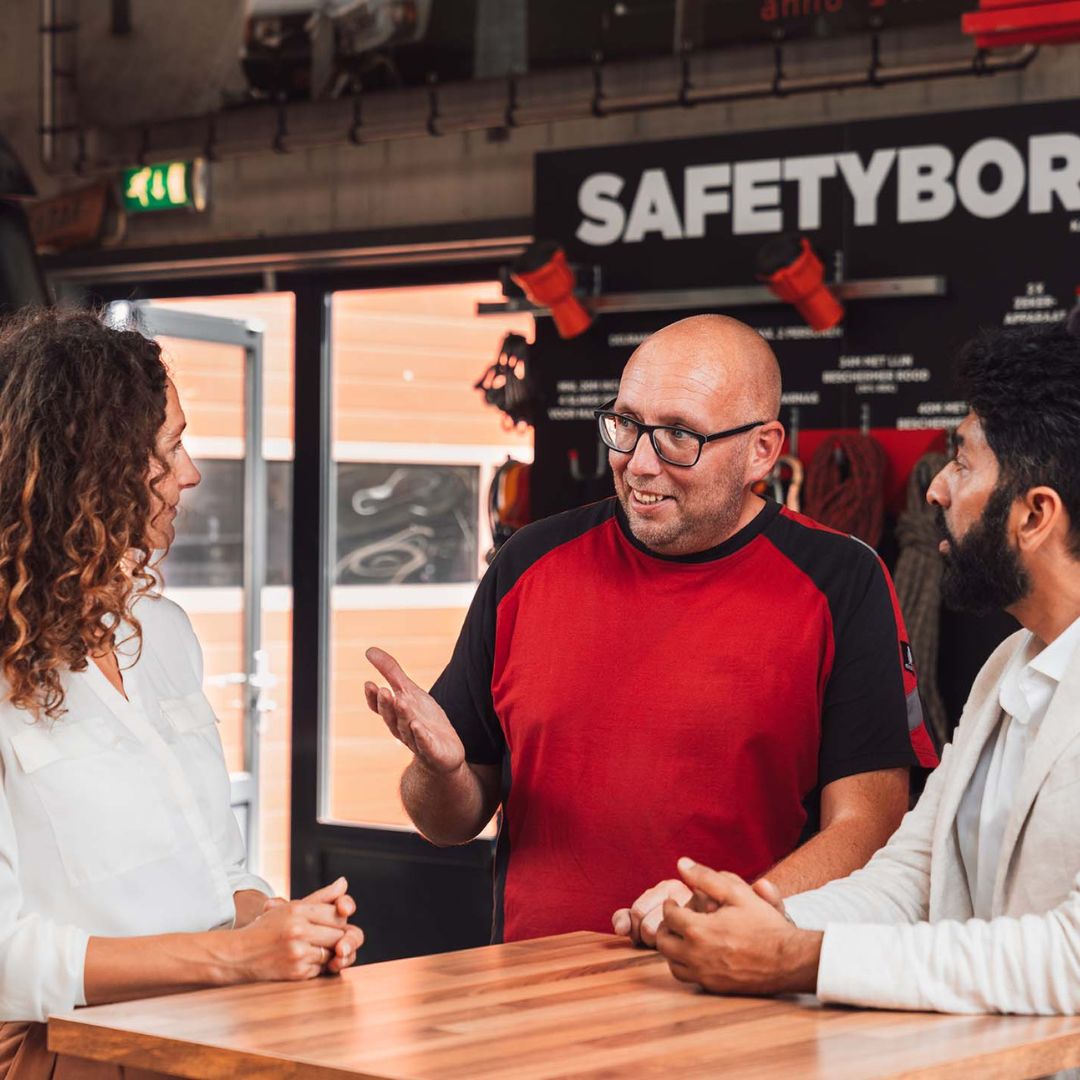

STRATEGIC HR
Deploy strategic HR to future-proof your organization
The culture and level of security that an organization offers its employees has a major impact on how employees feel, how productive they are and how high their vitality and sustainable employability is. Here, strategic HR and its deployment plays a major role.

What is strategic HR?
Strategic HR is the part of Human Resource Management that deals with the choices and decisions made (with respect to employees) with the goal of ensuring the continued existence of the organization. This also means future-proofing the organization and increasing the sustainable employability of employees.
Importance of strategic HR
It is up to the HR department within the organization to set up the processes so that employees can focus on their work and personal development. Not only the processes to guide absent employees back towards work, but also to keep employees working.
The HR department is an important building block for an organization and for its future plans. It goes beyond setting framework conditions and making policy plans. It's about having that foresight in areas such as personnel and turnover planning. Not only do you then ensure that the organization is ready for future plans, but it also offers the employee security and stability. This creates a constant workload when there is more or less work, for example.
Strategic human resources management
Personnel and turnover planning is part of the strategic personnel policy. Strategic personnel policy is a tool to achieve organizational goals with the premise that the policy fits the vision and mission of the company. Making and keeping an organization future-proof requires a policy around recruitment and selection, education and adjustment of working conditions.
What is strategic workforce planning?
To make and keep the organization future-proof, however, it is important that you start estimating and calculating what the future will bring. With strategic workforce planning, you identify future workforce challenges and bring together day-to-day operations and organizational strategy. It provides insight into the resources needed to meet organizational goals; optimal staff deployment and control of turnover; and more effective and targeted education for employees so that they and your organization remain sustainably employable.
Learn more about strategic HR
Want to learn more about what strategic HR as part of sustainable employability can do for your organization? Then contact paraDIGMA groep without obligation.
MORE STRATEGIC HR
Learn more about strategic HR as a basis for sustainable employability and how to improve it in the organization in one of our articles.

2024 is upon us! A new year brings changes, and in the HR field it is no different. We are happy to list for you what the changes for [...]

The employee satisfaction survey (MTO) is an important HR tool within any organization. If prepared properly, you will learn a lot about employee opinions on the issues that are important to you. But [...]
How things are going at work is something you should discuss. But please not in such a one-off year-end meeting, thinks Rudo Vissers, director of paraDIGMA groep. In newspaper Trouw he shares [...]
Many organizations are choosing to reduce management layers, organizing from a flatter structure . Something that fits well with hybrid working, for example: employees are increasingly taking [...]
2024 is upon us! A new year brings changes, and in the HR field it is no different. We are happy to list for you what the changes for [...]
The employee satisfaction survey (MTO) is an important HR tool within any organization. If prepared properly, you will learn a lot about employee opinions on the issues that are important to you. But [...]
How things are going at work is something you should discuss. But please not in such a one-off year-end meeting, thinks Rudo Vissers, director of paraDIGMA groep. In newspaper Trouw he shares [...]
Many organizations are choosing to reduce management layers, organizing from a flatter structure . Something that fits well with hybrid working, for example: employees are increasingly taking [...]
Want to learn more about sustainable employability and everything related to it? Then check out one of the other topics.